Why Building Capacity Is Key to Deliver Better Global Health Outcomes
Situational learning offers opportunities to improve medical education and ultimately patient care longterm. When the Center for Global Pediatric Health at the Robert J. Havey, MD Institute for Global Health and the Ann & Robert H. Lurie Children's Hospital of Chicago collaborated with Bugando Medical Center (BMC) in Tanzania to determine a need for these advancements in global pediatric care, they implemented a simulation-based system.
Lurie Children’s Hospital is a leader in using simulation-based training to improve pediatric care. As pediatric critical illness is high-risk, but often rare, using simulated case scenarios and feedback-based training allows pediatric providers to be well prepared to appropriately treat children and save lives. Simulation is an educational tool, ubiquitous in western medical education, that bridges learners from the classroom to the bedside to gain proficiency in skills prior to practicing on patients – a way that is safe for both learners and patients. In simulated cases, learners work with artificial representations, such as mannequins, virtual reality or actors, to replicate clinical scenarios for a learner to safely practice hands-on skills. However, many medical education programs in sub-Saharan Africa have only just started using simulation education for their learners despite having the majority of critically ill children.
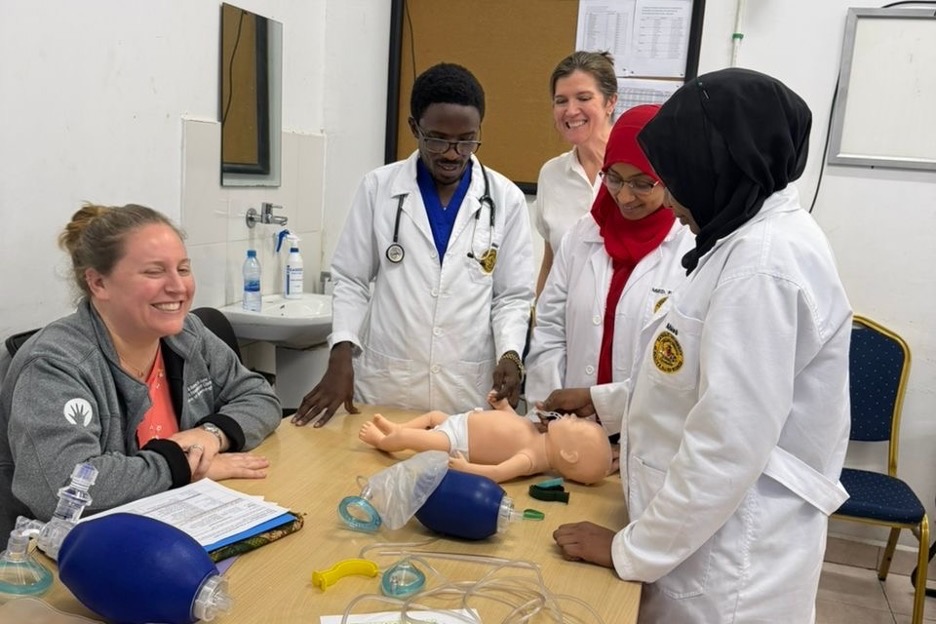
Simulation-based trainings offer a flexible learning environment for health professionals to practice skills.
Leading the project is Colleen Fant, MD, MPH, co-director of the Center for Global Pediatric Health and attending physician in the Department of Emergency Medicine at Lurie Children’s Hospital.
"Simulation education is essential in pediatric care to equip providers with the tools to rapidly and effectively respond to children in crisis and continuously improve the quality of care provided,” Fant said.
Through the kidStar Healthcare Education Program, the team enhances patient safety and provides top clinical care through an experimental learning process. A flexible learning environment allows health professionals to practice clinical skills and develop teamwork and communication skills.
"In the kidSTAR Global program, we work with pediatric educators to bring simulation to the bedside in Tanzania to address gaps in quality care for children,” Fant said. “As standards of care for children in resource limited settings are rapidly improving, only simulation allows providers to gain those skills safely."
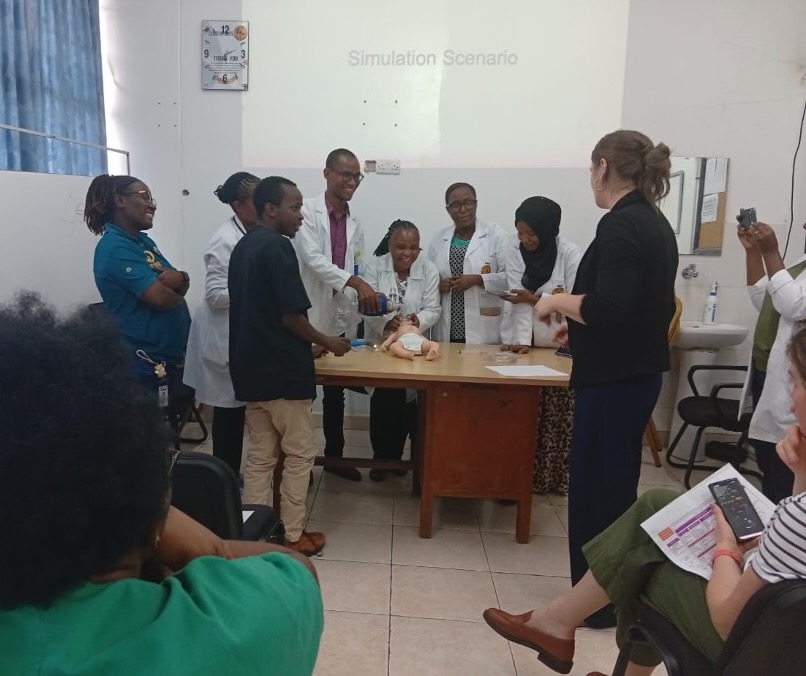
Colleen Fant, MD, MPH, co-director of the Center for Global Pediatric Health at the Havey Institute for Global Health, leads the project.
Lurie Children’s has provided simulation workshops for learners in East Africa since 2020 and has trained educators to use simulation in their settings. At their partner site Bugando Medical Center(BMC) in Tanzania, they recently began a new simulation program for pediatric residents in the management of acutely ill children. The capabilities of care for the critically ill child at BMC have rapidly increased since the COVID-19 pandemic, however, there remain few specialists in pediatric critical care. Pediatric residents remain the frontline providers caring for these ill children. Through this new simulation program, the team has developed a fresh portable simulation “lab” with mannequins and supplies used to train pediatric residents with skills around airway management, ventilator use, and acute clinical care scenarios such as respiratory failure and shock. An initial training was performed by Lurie educators with simulations around these skills, and the second phase of the program supports the local BMC educators to use the simulation tools for their residents’ education.
More than thirty pediatric residents and nurses participated in the initial training and shared overwhelmingly positive feedback. This simulation program will be held regularly to complement existing education and support safe practice for the learners to improve their care of children.
The Center for Global Pediatric Health is a joint center between the Havey Institute for Global Health at Northwestern University Feinberg School of Medicine and the Lurie Children's Hospital.
To learn more about the Center for Global Pediatric Health, visit their website.
For details on events, news and funding opportunities, sign up for the Havey Institute for Global Health newsletter.