Why Building Capacity Is Key to Deliver Better Global Health Outcomes
Tuberculosis (TB) is the deadliest infectious disease in the world, killing 1.23 million people in 2024. With a timely diagnosis, these numbers could drastically decrease. A team at the Robert J. Havey, MD Institute for Global Health, in collaboration with the Center for Innovation in Point-of-Care Technologies for HIV/AIDS and Emerging Infectious Diseases at Northwestern University (C-THAN), is spearheading innovative research for easy-to-collect TB testing with tongue swabs.
The project is led by C-THAN member Jerry Cangelosi, PhD, emeritus professor at the University of Washington (UW) in the Department of Environmental & Occupational Health Sciences and associate dean for research in the UW School of Public Health.
Cangelosi works with a research team from C-THAN and the UW School of Public Health, including Rachel Wood, MS; Alaina Olson; and Renee Codsi, MPH.

Key research team members from C-THAN and the UW School of Public Health include (L-R) Renee Codsi, Rachel Wood, Alaina Olson and Jerry Cangelosi.
“My background is in diagnostic test development, however, the swab effort was inspired by my current role as a public health scientist at UW School of Public Health,” Cangelosi said. “Our public health mission inspired us to seek ways to detect TB disease earlier than is currently possible. Early detection of TB is critical to reducing further transmission of the pathogen, Mycobacterium tuberculosis, currently the deadliest microbial pathogen in the world."
With funding over the past 13 years from C-THAN, Gates Foundation, National Institutes of Health and others, the team has demonstrated that tongue swabs can be used to collect samples for TB testing. Tongue swabs are easier, faster and safer to collect than the traditional TB specimen, sputum. They enable several big improvements to global TB testing, including the expansion of TB testing beyond clinics and into community settings where most TB transmission occurs; the use of cheaper and simpler molecular testing platforms; and the ability to test people who are unable to produce sputum samples, such as children and people with asymptomatic TB disease.
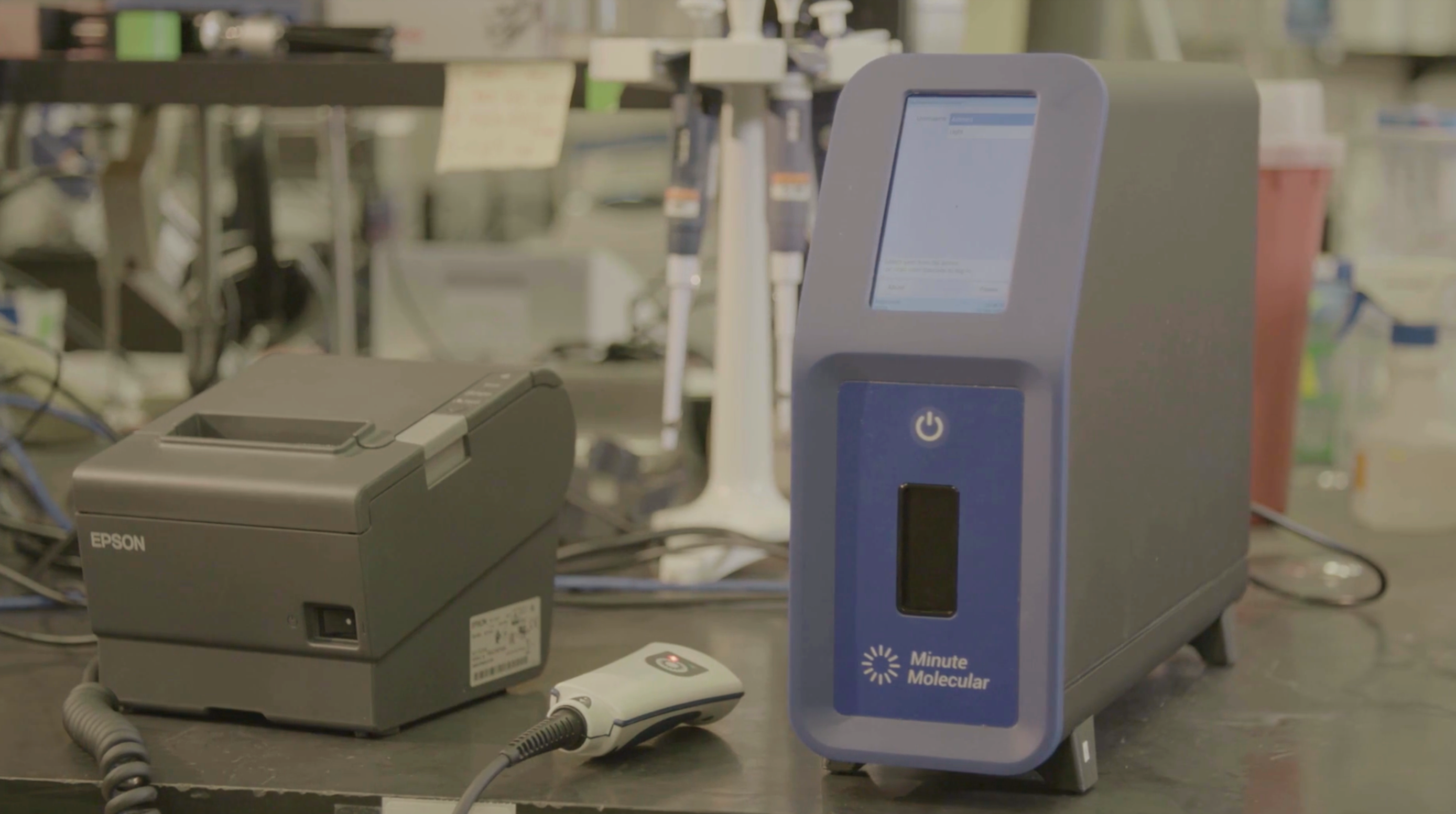
The new generation of swab-based near point-of-care (nPOC) tests costs $3 per test and uses instruments that cost $300. This is much cheaper than the current sputum-based commercial standard (Cepheid Xpert Ultra), which costs $700.50 per test and uses a $20,000 instrument. Though the research team did not develop these platforms, their swab method enables them.
Swab-based testing is slightly less sensitive than sputum testing; however, the capacity for increased access and expanded diagnostic coverage enables higher diagnostic yields with more TB cases detected overall. The World Health Organization (WHO) concurred with this novel paradigm. In February 2026, WHO announced its formal recommendation of tongue swabs, combined with new swab-based nPOC tests, for TB testing situations where sputum collection is not practical. Additional use cases may be endorsed in the future.

Non-invasive tongue swab sampling, combined with cheap, portable, nPOC tests, will revolutionize TB screening by enabling active case-finding in community settings such as workplaces, schools and high-prevalence neighborhoods.”
Jerry Cangelosi, PhD, C-THAN member and professor at the University of Washington
The project began at the University of Washington in the Department of Environmental & Occupational Health Sciences, with the team working in close and continuous collaboration with the South African Tuberculosis Vaccine Initiative (SATVI) at the University of Cape Town. Additional key collaborators over the years have included C-THAN and Northwestern University; the Rapid Research in Diagnostics Development for TB Network headquartered at University of California, San Francisco; the TB Guidance for Adaptable Patient-Centered Service research network headquartered at Baylor University; Global Health Labs; the Gates Foundation; additional South African institutions (Stellenbosch University, the University of Witwatersrand and the University of KwaZulu-Natal); the Copan Group; IRCCS Ospedale San Raffaele in Italy; and many others. Additionally, multiple corporations have built upon the swab concept to enable the new generation of nPOC tests, most notably Pluslife in China and Molbio in India.
“Our discoveries enabled new global test development efforts that spanned the globe,” Cangelosi said.
The group has worked in South Africa, Eswatini and Uganda. C-THAN provided encouragement and funding support to allow the team to look beyond method development and ahead to implementation. More specifically, C-THAN supported critical user preference studies among healthcare workers and migrants undergoing TB screening at migrant reception centers in Italy.
“It is estimated that a quarter to half of TB cases worldwide go undetected,” Cangelosi said. “These ‘missing millions’ of TB cases drive most transmissions of the deadly airborne disease. Non-invasive tongue swab sampling, combined with cheap, portable, nPOC tests, will revolutionize TB screening by enabling active case-finding in community settings such as workplaces, schools and high-prevalence neighborhoods. We believe that it will improve patient outcomes and reduce the further spread of the disease.”
To learn more about C-THAN, visit their website.
For details on events, news and funding opportunities, sign up for the Havey Institute for Global Health newsletter.