Why Building Capacity Is Key to Deliver Better Global Health Outcomes

For people living with HIV (PLHIV), a weakened immune system can lead to increased risk of potentially life-threatening infections like Tuberculosis (TB). A team from the Center for Innovation in Point-of-Care Technologies for HIV/AIDS and Emerging Infectious Diseases at Northwestern University (C-THAN), in collaboration with the Robert J. Havey, MD Institute for Global Health, has created a system called the Drizzle Health MagnaSlide to improve TB testing for enhanced diagnosis and treatment.
The project is led by the Baltimore-based startup Drizzle Health; C-THAN member and co-founder and chief technical officer of Drizzle Health Bonolo Mathekga; and collaborators at the Johns Hopkins School of Medicine. With work focused in India, South Africa and the U.S., the project also features study partners across India and South Africa and partnerships with groups and companies across other infectious diseases disciplines.
The Drizzle Health MagnaSlide focuses on improving the performance of TB diagnostics for PLHIV. Current tests perform poorly in this population: polymerase chain reaction sensitivity drops to 76.4% in PLHIV compared to 95.6% in HIV‑negative individuals, and smear microscopy detects only about 15% of cases in PLHIV versus about 50% in those without HIV. Despite these limitations, smear microscopy remains the de facto diagnostic tool in many high-burden TB settings because it is inexpensive (less than $1 per test) and does not require infrastructure such as air conditioning, reliable electricity or running water.
Importantly, smear microscopy is not inherently a “bad” test; poor performance stems from the quality of the sample being examined. The limitation is not the microscopy itself, but the input material.
This project demonstrates microscopy’s significantly higher sensitivity when used with the MagnaSlide.
“We build sampling and concentration tools,” Mathekga said. “There’s a lot of focus on creating better, faster and cheaper detection methods. However, if the samples going into that system are of low quality, then the results will be poor, regardless of how great the detection mechanisms are. Our proprietary polymer systems work by selectively capturing and concentrating pathogens of interest.”
The MagnaSlide platform is designed to improve TB test performance. Beginning with smear microscopy, the tests have demonstrated increased sensitivity using Drizzle Health’s proprietary tunable polymer surface, which selectively binds Mycobacterium tuberculosis (the bacteria that causes TB) from sputum.

The team’s work began in TB and has since expanded to a variety of infectious pathogens, including food and water safety. Most infectious disease diagnostics suffer from the same sample bottlenecks. For example, their platforms for E. coli and Salmonella enable producers to test large volumes of food or wash water and obtain samples that are truly representative of an entire batch. Because their technology captures and concentrates pathogens directly, the traditional 24- to 48-hour enrichment step is eliminated. This gives processing plants actionable information early enough to intervene before contaminated products reach consumers.
In TB, their work is imperative for low bacterial load cases such as subclinical TB cases. Drug‑susceptible TB is curable, but only if it is found (i.e. to treat TB, you need to find TB). Therefore, truly eradicating TB will require finding and treating all subclinical TB cases. This necessitates population-wide screening using a test that is both highly sensitive and affordable. Drizzle Health’s MagnaSlide enables widespread smear microscopy infrastructure, existing in high-burden countries, to achieve near‑molecular performance (100% specificity and about 80% to 94% sensitivity) at one-tenth the cost of molecular testing. By improving the sample rather than the assay (the analysis of characteristics), the process unlocks the sensitivity needed to detect hidden TB cases at scale to completely stop community transmission.
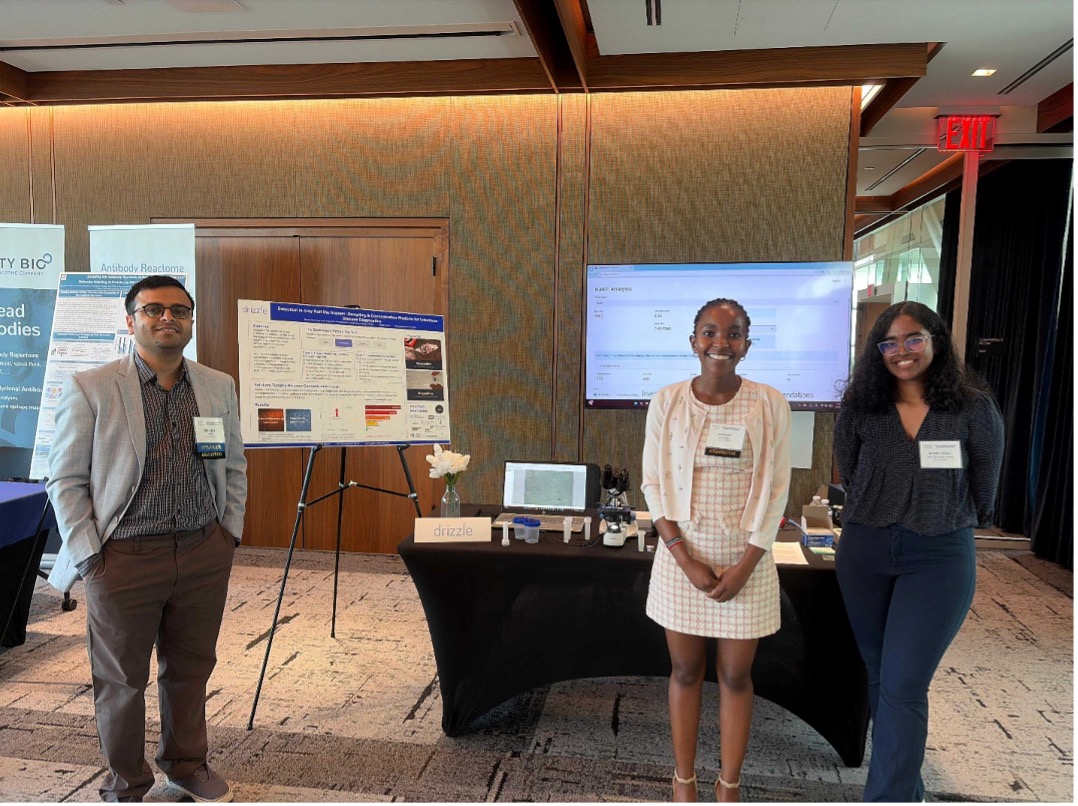
“It has been both encouraging and heartening to see people thinking about disease and innovation from a first principles perspective instead of riding bandwagons, and we’ve been lucky to have had support from groups such as C-THAN,” Mathekga said.
To learn more about C-THAN, visit their website.
For details on events, news and funding opportunities, sign up for the Havey Institute for Global Health newsletter.