Why Building Capacity Is Key to Deliver Better Global Health Outcomes
Leaders from the Center for Pathogen Genomics and Microbial Evolution (CPGME) at the Robert J. Havey, MD Institute for Global Health traveled to Universidad Peruana Cayetano Heredia (UPCH) in Lima, Peru in late April for trainings in bacterial DNA extraction, genomic sequencing and bioinformatics. This training was performed as part of the Global Genomic Surveillance of Antimicrobial Resistance (GENOSAR) project, of which UPCH is one of four global surveillance sites. Whole genome sequencing of antibiotic-resistant bacteria identifies resistance and virulence factors and can track the spread of disease. One aim of the GENOSAR project is to build infrastructure and provide training so each site can perform surveillance of antimicrobial resistance (AMR) in their own hospitals and communities.
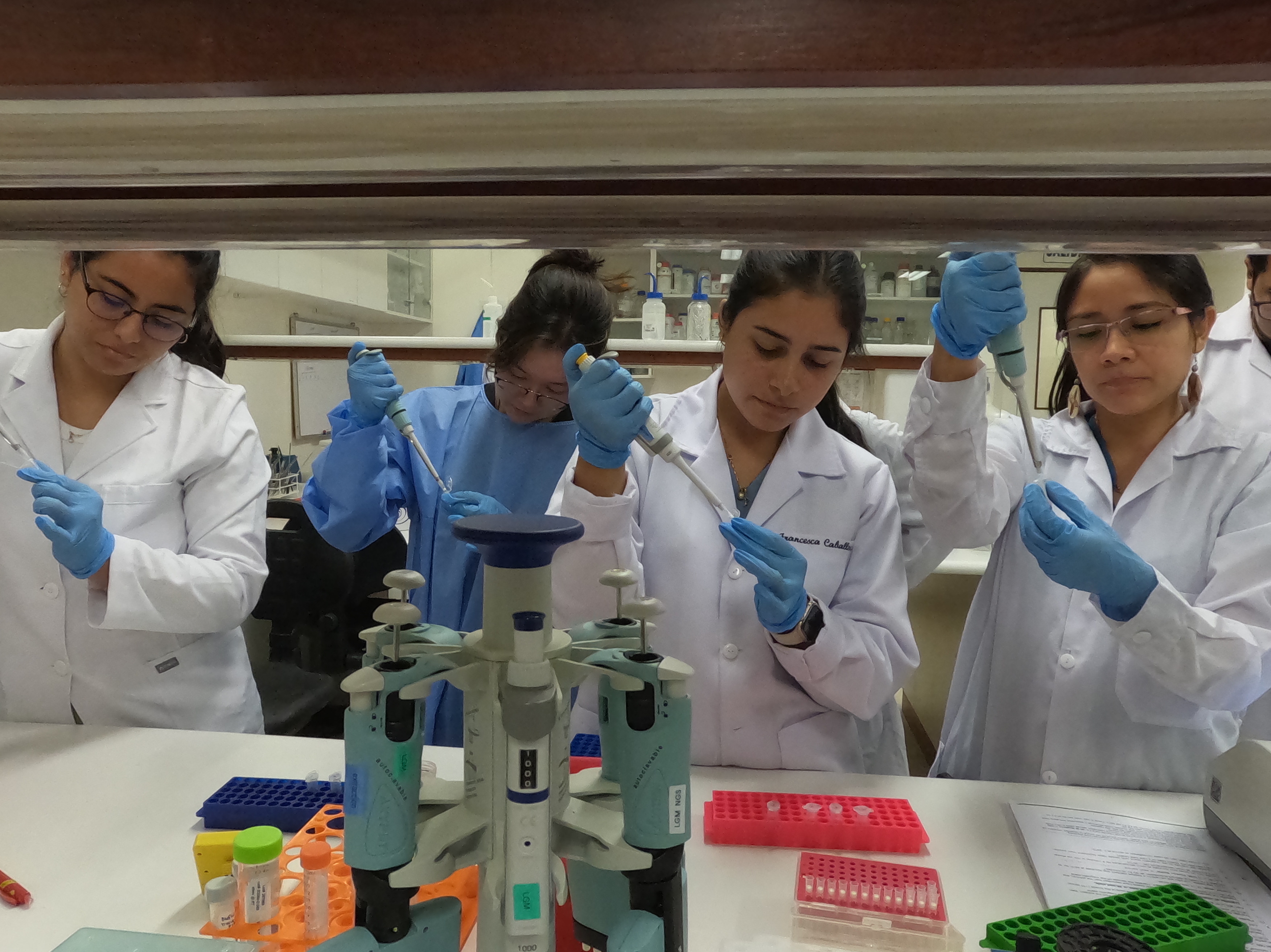 Participants at the training session pipette samples for the Oxford Nanopore sequencer.
Lacy Simons, MPH, senior researcher at CPGME, led eight students through the GENOSAR protocol for preparing clinical bacterial isolates for DNA extraction, genome library preparation and sequencing on a lightweight, portable Oxford Nanopore device. This process included breaking the bacterial cells, separating and purifying the DNA from the cell debris, and binding the bacterial DNA to specialized DNA fragments that allow them to be read by the Oxford Nanopore sequencer.
After the device reads the whole genome sequence in long fragments, Egon Ozer, MD, PhD, director of CPGME and associate professor of Medicine in the Division of Infectious Diseases, led attendees through bioinformatics training to analyze the sequences. The attendees worked through installing computer software for genome assembly, AMR gene and mutation identification and phylogenetic analysis. On the final day of the workshop, attendees were guided through the process of analyzing the bacterial samples they had sequenced at the start of the week.
As part of their visit, the Northwestern team toured the Institute of Tropical Medicine Alexander von Humboldt (IMTAvH) and the Clinical Microbiology Laboratory at Hospital Cayetano Heredia. Bacterial specimens from Hospital Cayetano Heredia and another hospital in Lima will be analyzed as part of the GENOSAR project.

Egon Ozer and Lacy Simons from the Center for Pathogen Genomics and Microbial Evolution led trainings at the Institute of Tropical Medicine Alexander von Humboldt in Lima, Peru in April.
To learn more about the Center for Pathogen Genomics and Microbial Evolution, visit their website.
For details on events, news and funding opportunities, sign up for the Havey Institute for Global Health newsletter.