Lumati Awarded Career Development Award from ASCO’s Conquer Cancer Foundation
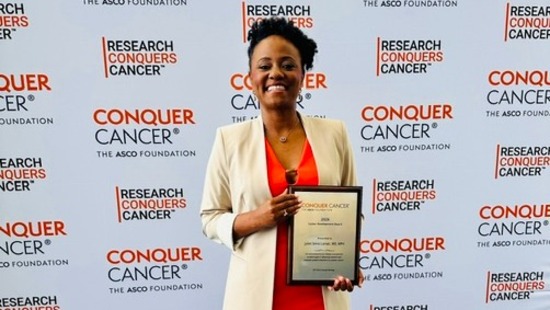
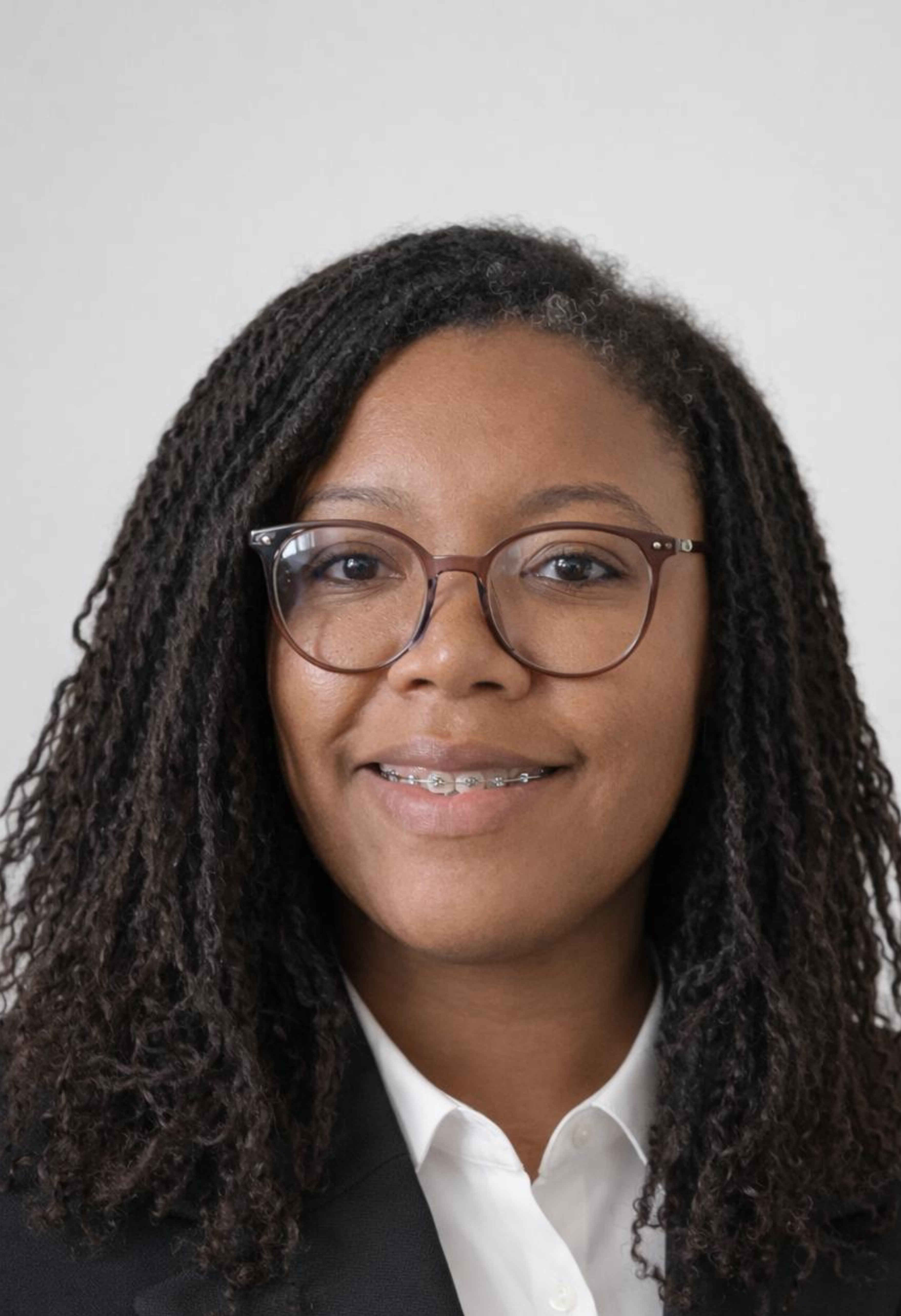
Dannielle Grayer, MD, MPH, is an incoming faculty member in the Department of Medicine Division of Infectious Diseases at Northwestern University Feinberg School of Medicine. Her faculty appointment will begin in September. She is a member of the Robert J. Havey, MD Institute for Global Health (IGH) Center for Global Communicable & Emerging Infectious Diseases.
What motivates me most is the opportunity to address health disparities and contribute to research that is directly related to the communities it serves.”
How did you get involved in global health?
My initial exposure to global health occurred while I was completing my master of Public Health at Indiana University. I was selected as one of two scholars to participate in the Academic Model Providing Access to Healthcare (AMPATH) Kenya — a partnership among Moi University, Moi Teaching and Referral Hospital and the AMPATH Consortium of universities around the world led by Indiana University. During this experience, I worked with a multidisciplinary team conducting HIV research focused on children and adolescents with perinatally acquired HIV in Eldoret, Kenya.
After completing my MPH, I entered medical school and had the opportunity to return to Eldoret. There I spent two months living and working in both adult and pediatric inpatient wards. It was an incredibly formative experience and one that I credit with strengthening my clinical skills, particularly in history-taking, physical examination and caring for patients in resource-limited settings.
Those early experiences solidified my commitment to global health and ultimately shaped my career in infectious diseases.
What interests and motivates you about global health?
I have long been passionate about working with resource-limited populations, both locally and globally. What motivates me most is the opportunity to address health disparities and contribute to research that is directly related to the communities it serves.
Global health has also taught me the importance of partnership and bidirectional learning. Some of the most innovative and impactful approaches to healthcare delivery arise from settings where resources are limited, and I am continually inspired by the resilience of patients and healthcare teams working in those environments.
What is the goal of your research?
My current research focuses on cardiometabolic dysfunction and cardiovascular disease risk among older adults with HIV. As advances in antiretroviral therapy have allowed people with HIV to live longer, chronic conditions such as metabolic syndrome, diabetes and cardiovascular disease have emerged as major contributors to morbidity and mortality.
The goal of my research is to better understand the interplay between HIV, chronic inflammation, aging and cardiometabolic disease to identify individuals at highest risk and develop strategies to promote healthy aging among people living with HIV.
What countries or regions is your work focused on?
My current work is primarily focused in Tanzania where I collaborate with investigators and clinicians in Dar es Salaam. My previous global health experiences and research collaborations have also included the Dominican Republic through the Community Empowerment program and Kenya through the AMPATH program.
Have you recently published any work?
Recent publications include:
There are currently three manuscripts in preparation for my work with the team at Muhimbili University of Health and Allied Sciences in Tanzania, and I will be presenting my work examining metabolic syndrome, cardiovascular disease risk and inflammatory biomarkers among older adults living with HIV in Tanzania at AIDS 2026, the 26th International AIDS Conference.
What types of collaborations are you engaged in across campus and beyond?
My work is highly collaborative and spans infectious diseases, cardiology, epidemiology, endocrinology, biostatistics and implementation science. I work closely with faculty and trainees at Feinberg and Ann & Robert H. Lurie Children's Hospital of Chicago, as well as clinical and research partners in Tanzania. These collaborations bring together expertise in HIV, aging, cardiovascular disease and global health to address emerging health challenges among older adults living with HIV.
Who inspires you?
I am inspired by the patients and communities with whom I have had the privilege to work throughout my training. Their resilience, trust and willingness to participate in research continually remind me why this work matters.
I am also inspired by the mentors who have invested in my development as a physician-scientist and demonstrated the importance of combining rigorous science with meaningful community partnerships.
Anything else to share?
As an infectious diseases physician-scientist, I am particularly interested in the intersection of HIV, chronic inflammation and cardiovascular health across the lifespan. Much of my work seeks to address questions that are highly relevant to populations that have historically been understudied.
My long-term goal is to develop a research program focused on healthy aging with HIV that combines clinical research, global partnerships and capacity building to improve outcomes for people living with HIV worldwide.
