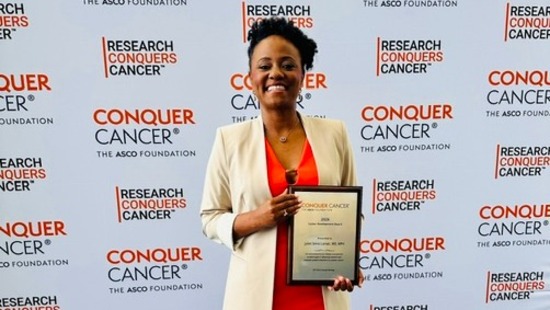
Lumati Awarded Career Development Award from ASCO’s Conquer Cancer Foundation
It is my hope that my research output will benefit a wider population of people living with HIV infection in Africa and potentially the whole world.”
How did you first get involved in global health?
Being an African, born and raised, I would say I have always been involved in global health. Prior to completing my medical training, my involvement was mainly in clinical care and teaching. However, I’ve recently developed an interest in research, which I think will have more impact globally as I contribute to the global pool of knowledge.
What interests or motivates you about global health?
The need to address specific health challenges that need contextualized solutions to commensurate with the available resources and specific sociocultural environments. This is because the “one size fits all” recommendations that are often promulgated by international organizations are often not practical in certain contexts. A simple example in my field of liver diseases is the inability of most people who have viral infections of the liver to undergo routine screening for liver cancer every six months.
What type of work do you do and why is it important?
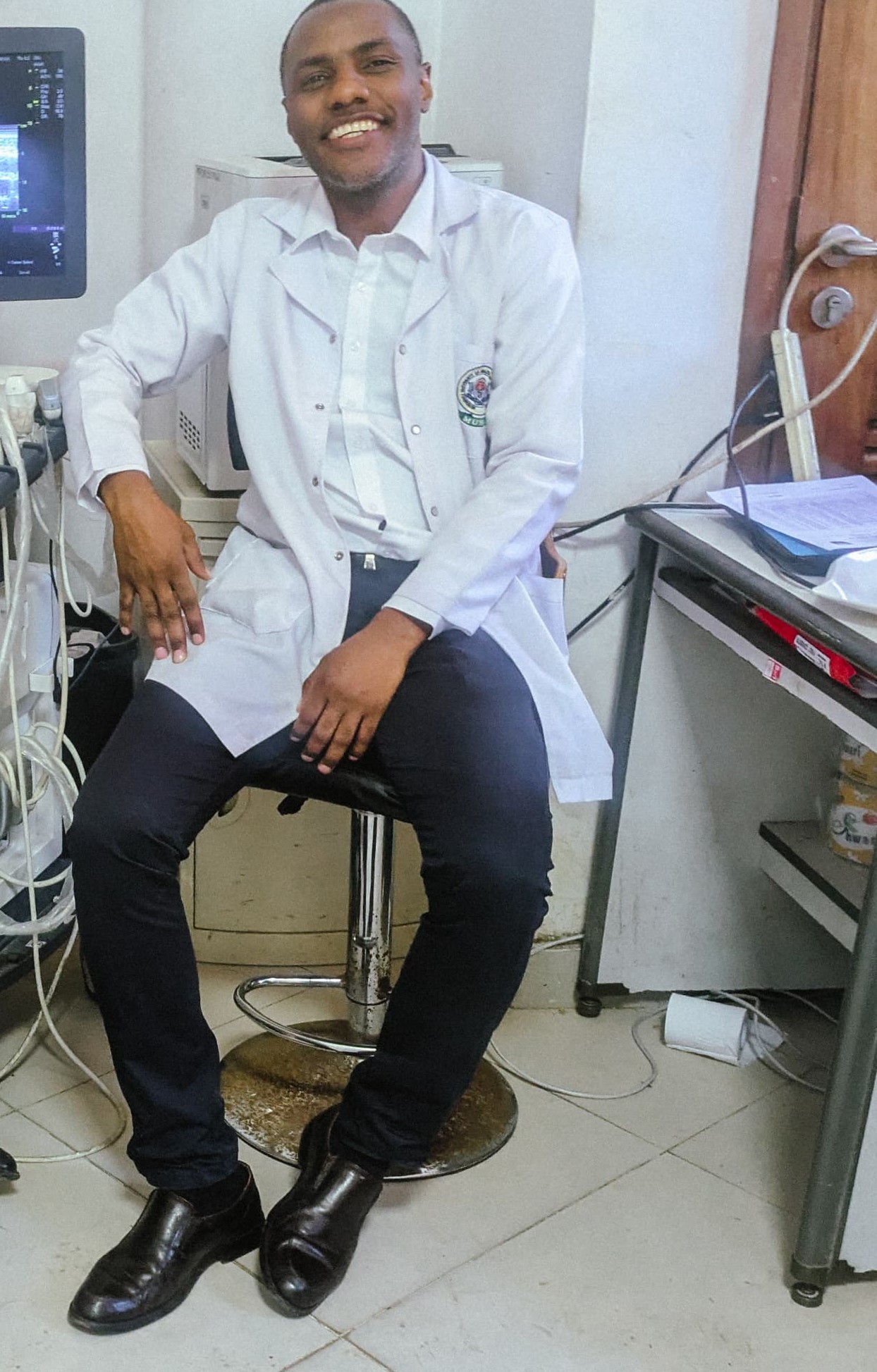
I teach undergraduate and postgraduate students attending the medical school at Catholic University of Health and Allied Sciences in Mwanza, Tanzania. In addition, I do clinical work (seeing patients) at the university teaching hospital.
What is the goal of your research?
The aim of our study is to investigate how the heart functions in the presence of fat in the liver in people living with human immunodeficiency virus (HIV), and we prospectively evaluate the study participants for a number of years to document how changes in the amount of fat in the liver influence how their hearts function.
Who is involved in your research (institutes, faculty members, etc.):
Claudia Hawkins, MD, MPH, director of the Havey Institute for Global Health Center for Global Communicable and Emerging Infectious Diseases and professor in the Division of Infectious Diseases at Northwestern University Feinberg School of Medicine, and Hyasinta Jaka, MD, MMED, MHPE, PhD, professor of gastroenterology at Catholic University of Health and Allied Sciences and physician at Weill Bugando Medical Centre, serve as my mentors. In addition, Eva Mujuni, MD, a cardiologist and lecturer at Weill Bugando Medical Centre, has contributed significantly as a consultant cardiologist.
What countries/regions is your work focused on?
My work is based in northwestern Tanzania. It is my hope that my research output will benefit a wider population of people living with HIV infection in Africa and potentially the whole world.
Applications for the 2027-2028 HBNU Fogarty Global Health Fellowship are being accepted until September 25, 2026. For more information and to apply, visit the fellowship webpage.
For details on events, news and funding opportunities, sign up for the Havey Institute for Global Health newsletter.
