Rafal Sobota on Developing New Therapies for Children with Neuroinfectious Diseases
November 5, 2026
FACULTY PROFILE
Read the Q&A below
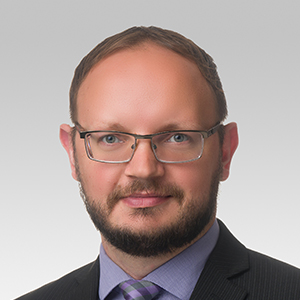
Rafal Sobota, MD, PhD, is an assistant professor in the Department of Neurology in the Division of Neurocritical Care at Northwestern University Feinberg School of Medicine and a member of the Center for Global Neurology, a new center within the Robert J. Havey, MD Institute for Global Health (IGH). He specializes in neurology and neurocritical care, and his research focuses on neuroinfectious diseases, particularly cerebral malaria.
How did you get involved in global health?
I was born and raised in Poland, which exposed me to the consequences of health disparities from an early age. This inspired me to pursue a career in medicine, with a focus on helping underserved populations. I became involved in global health projects during my doctorate work at Vanderbilt University in Dar es Salaam, Tanzania and a Fogarty International Clinical Research Scholar stint in Bamako, Mali. The patients and collaborators I met during my time working abroad have inspired me to dedicate my career to global health.
I've always been motivated by the scope of the problem and the immense benefit of one day finding a sustainable solution.”
What interests and motivates you about global health?
During my time in Africa, there was only one practicing neurologist in all of Mali. At that time, the total population of the country exceeded 16 million. While our discipline has recently undergone rapid expansion of available diagnostics and therapeutics in the U.S., the field has remained stagnant and underrepresented in places like Mali. The potential amount of morbidity and mortality that could be prevented by filling this void is difficult to grasp, but it is highly motivating. The societal cost of childhood diseases, such as cerebral malaria, is even higher. A bit of a dreamer, I've always been motivated by the scope of the problem and the immense benefit of one day finding a sustainable solution.
What is the goal of your research?
The overarching goal for my research is to gain an understanding of the pathophysiology of cerebral malaria and use that knowledge to develop specialized therapeutic interventions for children afflicted with the disease. I am involved in projects studying the genetic profile of Plasmodium falciparum associated with central nervous system involvement and human immune responses to these parasites. Improved understanding of parasite genomics can lead to identification of novel vaccine targets, while a better grasp of the host immune response can pinpoint therapeutic targets.
What countries/regions is your work focused on?
Cerebral malaria is endemic to sub-Saharan Africa, and it has the highest case fatality of all severe malaria syndromes. I study this morbid disease through longstanding collaboration with colleagues at the Malaria Research and Training Center in Bamako, Mali, along with more recent projects with the Blantyre Malaria Project in Malawi and Kampala, Uganda.
Have you recently published work?
I am a co-author of a manuscript entitled "var2csa transcription implicates variant surface antigen switching in cerebral malaria pathogenesis" that has been recently accepted in Nature Communications. This work discovered an association between a highly conserved gene involved in variant surface antigen switching of Plasmodium falciparum, immune system evasion and the development of cerebral malaria in cohorts from Malawi and Mali.
I am the first author of a manuscript describing human transcriptomic, proteomic and metabolomic patterns in children who developed severe malaria as compared to controls with uncomplicated Plasmodium falciparum infections in Mali. We discovered a shared inflammatory cascade of all severe malaria subtypes, along with a unique blood brain barrier-related set of genes differentially expressed in cerebral disease.
I am a co-author of a manuscript describing expression and human antibody response to a subset of Plasmodium falciparum multigene families in severe malaria, as compared to uncomplicated disease. The findings suggest exposure to a set of specific antigens during illness and identify them as potential targets in the development of natural protective immunity against severe malaria.
What types of collaborations are you engaged in across campus and beyond?
I work in close collaboration with Dr. Farzaneh Sorond at Northwestern University, and Drs. Mark Travassos and Emily Stucke at the University of Maryland, Baltimore, who have been mentors and great colleagues throughout my academic career. I also cherish more recent collaborations with Drs. Karl Seydel and Nicole O'Brien from the Blantyre Malaria Project, as well as Drs. Roxanna Garcia and Farrah Mateen at the Havey Institute for Global Health.
Who inspires you?
First and foremost, I'm inspired by the strength and perseverance of the patients and health care workers I've met during my time in Mali and Tanzania. I owe a great deal to many mentors who have helped me in this career path, especially Drs. Scott Williams and Sten Vermund, whose hard work and dedication to global health causes throughout the world inspired me to pursue this field. I am contractually obligated to also say that I am inspired by my wife.
Learn about the Center for Global Neurology.
For details on events, news and funding opportunities, sign up for the Havey Institute for Global Health newsletter.