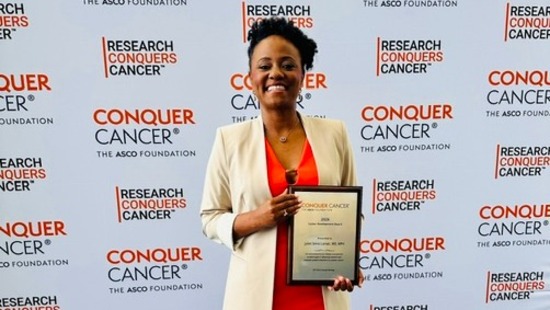
Lumati Awarded Career Development Award from ASCO’s Conquer Cancer Foundation
The fourth annual Palliative Care Symposium was held June 17-19, 2026 in Lagos University Teaching Hospital (LUTH). Themed "Palliative Care in Practice: Communication, Spirituality and Teaching for Sustainable Care in Nigeria," this year’s symposium emphasized strengthening the knowledge, skills and teaching capacity of Nigerian healthcare professionals to improve the delivery of compassionate, patient-centered palliative care while building sustainable systems for future training.
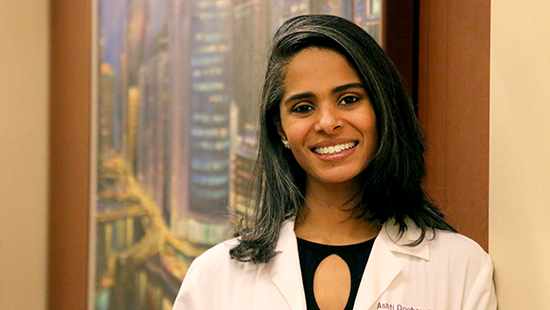
This year’s symposium was co-chaired by Ashti Doobay-Persaud, MD, professor of Hospital Medicine and Medical Education and co-director of the Center for Global Health Education at the Robert J. Havey, MD Institute for Global Health, and Joshua Hauser, MD, professor of Hospital Medicine and Medical Education and director of Education in Palliative & End-of-Life Care Program (EPEC) at Northwestern University Feinberg School of Medicine. Ann Ogbenna, MD, associate professor at the College of Medicine, University of Lagos, was the Nigerian co-chair and planning team leader.
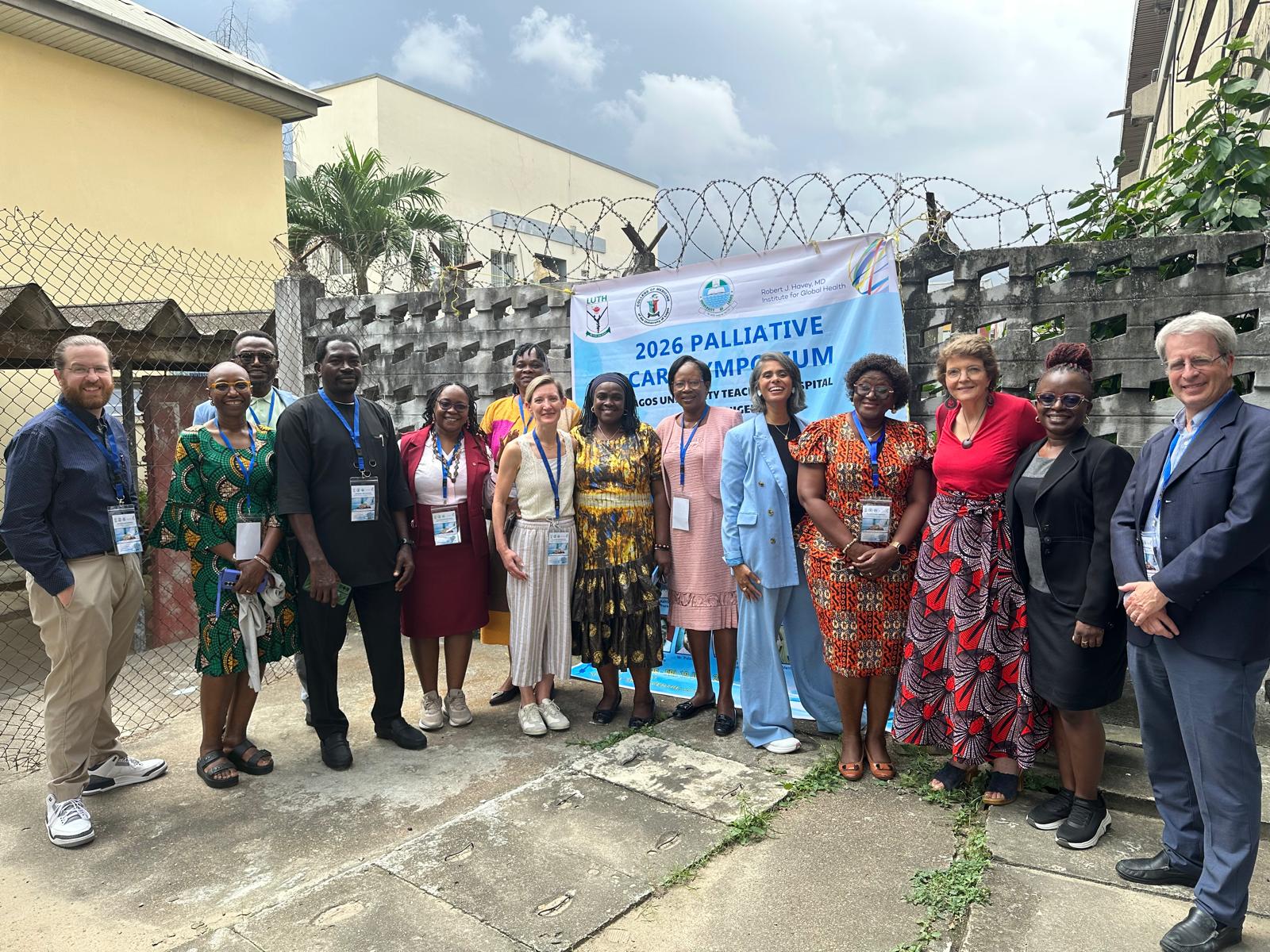
Facilitators at the Palliative Care Symposium at Lagos University Teaching Hospital in June 2026.
The event featured facilitators and speakers from Northwestern, Ann & Robert H. Lurie Children's Hospital of Chicago, Stanford University, International Children’s Palliative Care Network (ICPCN), City of Hope, the African Palliative Care Association (APCA), and Nigerian partner institutions University College Hospital (UCH) Ibadan, the University of Port-Harcourt Teaching Hospital (UPTH) and LUTH.
This time, the symposium was designed primarily for returning participants who had attended previous symposiums, allowing the 50 attendees to have more in-depth skill development and the opportunity to build on knowledge and competencies. Of the attendees, 60 percent were nurses and 21 percent were physicians. The symposium also brought together clinicians from diverse specialties across numerous fields with the most common being pediatrics, oncology, midwifery, and community and public health. Approximately 74 percent of attendees had previous training in palliative care, highlighting the symposium’s ability to enhance pre-existing skills regarding palliative care practices.
The engagement, collaboration and commitment from participants reinforces the importance of sustained partnerships in building palliative care capacity in Nigeria.”
"Each year this collaboration grows stronger, and this symposium reflected the value of investing in long-term capacity building,” Doobay-Persaud said. “Focusing specifically on returning participants allowed us to move beyond foundational concepts and focus on strengthening practical teaching and clinical skills.”
The first day centered around two foundational pillars of palliative care in communication and spirituality. Through a combination of plenary presentations, interactive role-play exercises, breakout discussions and reflective sessions, participants developed practical skills for breaking bad news, responding empathetically to patients' emotions, and addressing the spiritual needs of individuals and families facing serious illness. The format encouraged participants to practice real-world communication techniques, receive peer and faculty feedback, and reflect on how these approaches could be integrated into their own clinical settings.
The second day shifted attention to faculty development and educational excellence, which provided participants with practical teaching strategies to strengthen palliative care education across their institutions. Facilitators introduced evidence-based approaches to interactive lectures, case-based teaching and role-play methodology before participants practiced these techniques in small group breakout sessions. By emphasizing active learning and learner engagement, the professional development workshop aligned with the symposium's broader goal of preparing participants as both practitioners and educators to share palliative care knowledge and skills with colleagues within their respective organizations.
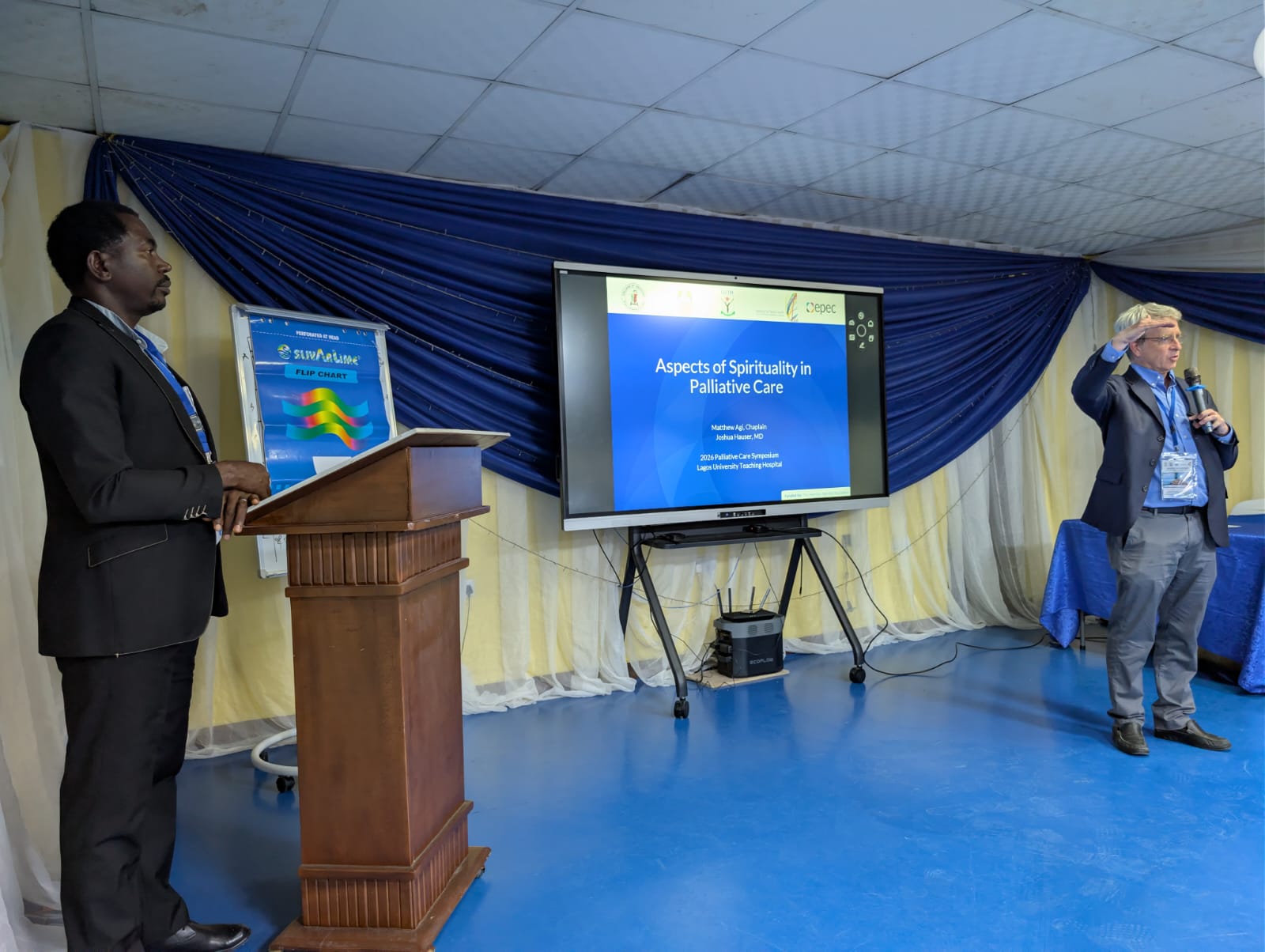
The first day of the symposium highlighted two foundational pillars of palliative care in communication and spirituality.
The final day focused on implementation by supporting participants in developing individualized teaching plans for use after the symposium. Collaborative planning sessions enabled attendees to identify opportunities to integrate palliative care education into their institutions’ teaching practices. An ongoing monthly community of practice was also noted as an option for participants’ next steps for future learning. The day emphasized the symposium's overarching objective of creating an enduring internal training framework that supports continued learning, collaboration and the integration of palliative care into routine clinical practice throughout Nigeria.
In a post-event survey, participants stated that the symposium improved their confidence and communication within palliative care, specifically with their ability to navigate difficult conversations and incorporate spirituality. Participants in the train-the-trainer session demonstrated increased confidence in their ability to develop a targeted, effective teaching plan to train others in palliative care. Attendees enjoyed the collaborative, engaging environment of the sessions and balancing information for different clinical roles.
“The engagement, collaboration and commitment from participants bolstered the importance of sustained partnerships in building palliative care capacity in Nigeria," Doobay-Persaud said.
Together, the three-day program reinforced the importance of interdisciplinary collaboration, compassionate communication and faculty development in expanding access to high-quality palliative care. In addition, the 2026 symposium demonstrated the significance of continued support in the sustainable growth of palliative care services and education, and future trainings aim to further the reach of these practices throughout Nigeria and the broader region, further highlighting the long lasting impact of donor funds.
Ashti Doobay-Persaud, MD, and Joshua Hauser, MD, are members of the Robert J. Havey, MD Institute for Global Health and Institute for Public Health and Medicine (IPHAM). Doobay-Persaud is a member of Northwestern University Clinical and Translational Sciences Institute (NUCATS).
To learn more about the Center for Global Health Education, visit their website.
For more information about supporting the Havey Institute for Global Health, please contact Jenn Burke at jennifer.burke@northwestern.edu or (312)503-4635.
For details on events, news and funding opportunities, sign up for the Havey Institute for Global Health newsletter.
