Lumati Awarded Career Development Award from ASCO’s Conquer Cancer Foundation

The prevailing goal at the Robert J. Havey, MD Institute for Global Health is to improve health for a better world. Through donor investment, the institute advances these goals by creating opportunities for critical research that expands knowledge, capacity and equity in global health.
One such funding mechanism, established in 2025, provides support to the Center for Pathogen Genomics and Microbial Evolution to develop international strategies to address the growing global burden of infections caused by antimicrobial resistant bacteria. Such infections are increasingly difficult to treat with conventional antibiotics and are predicted to contribute to more than 8 million global deaths annually by the year 2050. A global approach using state-of-the-art technologies for tracking the emergence and spread of antimicrobial resistant infections around the world is crucial to develop effective strategies for prevention and new therapies for treatment of these dangerous diseases.
Leading the project is Egon Ozer, MD, PhD, director of the Center for Pathogen Genomics and Microbial Evolution at the Havey Institute for Global Health and associate professor in the Department of Medicine in the Division of Infectious Diseases.
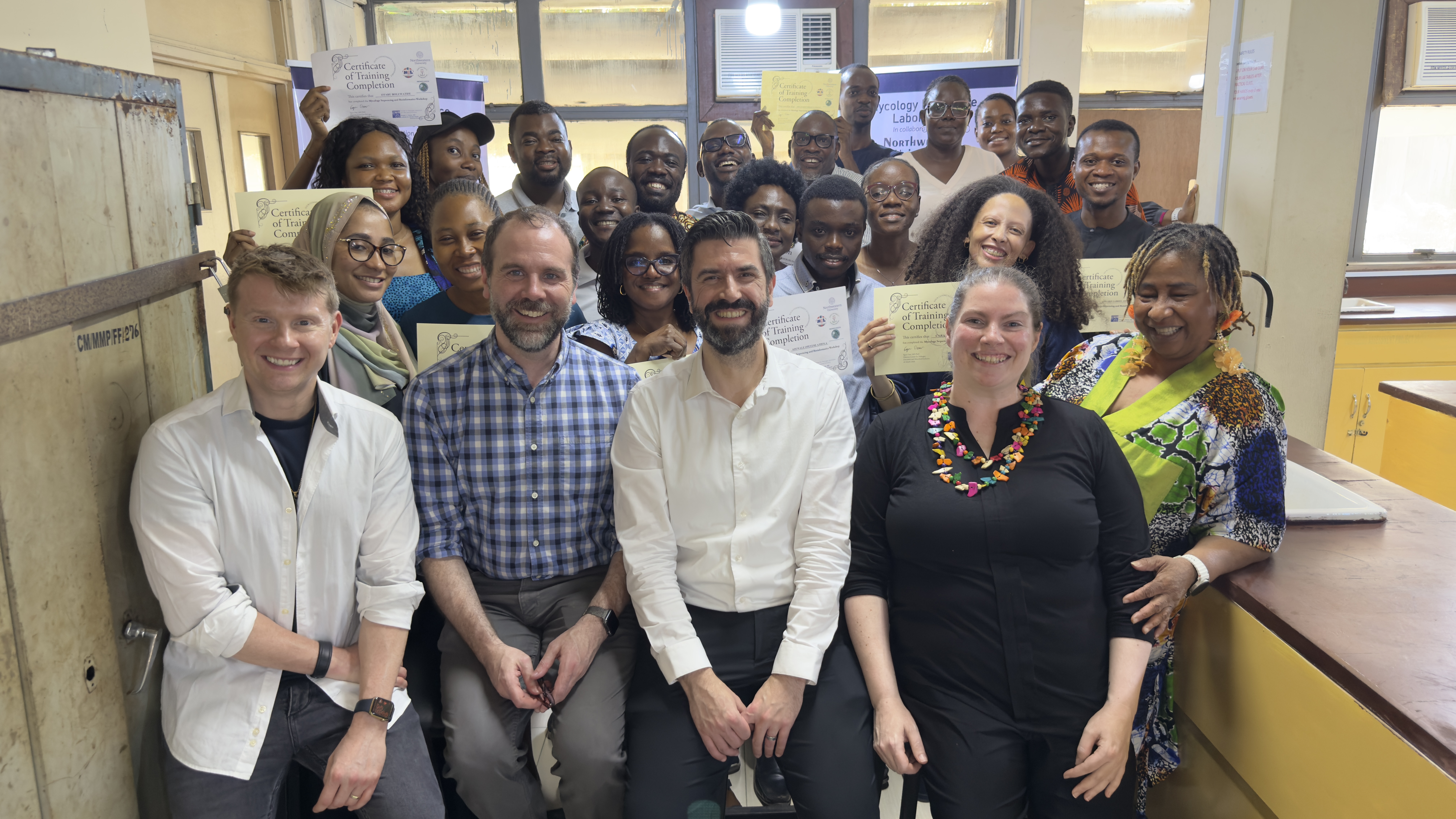
Leadership from the Center for Pathogen Genomics and Microbial Evolution at the Havey Institute for Global Health spearhead the Global Genomic Surveillance of Antimicrobial Resistance (GENOSAR) project.
Supported by a $1.2M investment, the Global Genomic Surveillance of Antimicrobial Resistance (GENOSAR) project builds capacity to detect and track antimicrobial resistant bacteria in low- and middle-income countries with high burdens of infections. Working with partners at sentinel sites in Nigeria, Pakistan, Peru and South Africa, the GENOSAR project establishes local programs for the surveillance of antibiotic-resistant bacteria by developing a laboratory infrastructure for microbial genome sequencing and building capacity for the analysis of genome sequence data.

Philanthropic donations have allowed us to provide much needed laboratory equipment and specialized training to combat the rise of drug-resistant infections in some of the most affected parts of the world.”
The information collected by the sentinel sites includes measures of the genetic diversity of bacteria that cause infections, and the mutations they develop to become resistant to antibiotics. Using computational modeling, these data will be analyzed to understand how antibiotic-resistant bacteria develop and spread and how these infections can be more effectively prevented and treated.
“The GENOSAR project has made a significant impact on the ability of our partner institutions in Nigeria, Pakistan, Peru and South America to detect the emergence and spread of antibiotic-resistant bacterial infections in their communities,” Ozer said. “Philanthropic donations have allowed us to provide much needed laboratory equipment and specialized training to combat the rise of drug-resistant infections in some of the most affected parts of the world.”
To learn more about the Center for Pathogen Genomics and Microbial Evolution, visit their website.
For more information about supporting the Havey Institute for Global Health, please contact Jenn Burke at jennifer.burke@northwestern.edu or (312)503-4635.
For details on events, news and funding opportunities, sign up for the Havey Institute for Global Health newsletter.
