Podcast Rewind: Trailblazing a Path in Global Health with Lisa R. Hirschhorn, MD, MPH
Cervical cancer is one of the most preventable cancers yet it continues to disproportionately affect women in low- and middle-income countries (LMICs), revealing persistent inequities in access to prevention, early detection and timely treatment. Nearly 90 percent of cervical cancer–related deaths worldwide occur in LMICs, despite the availability of effective prevention through human papillomavirus (HPV) vaccination and routine screening.
In Chile, cervical cancer remains a significant public health concern, particularly among women in rural and socioeconomically underserved regions. While the country has made important advances in expanding health coverage, gaps persist in screening participation due to geographic barriers, limited access to trained providers, and discomfort with clinician-collected sampling. These challenges align closely with national priorities to modernize screening strategies and improve equity in cancer prevention.
Researchers from the Center for Global Oncology at the Robert J. Havey, MD Institute for Global Health are addressing these challenges by adapting innovations in at-home, self-sample collection and near point-of-care HPV testing. The team is piloting this approach in underserved regions of Chile to generate real-world evidence that can inform scalable screening models—both across South America and in vulnerable communities in the United States.
The project is led by Brian Joyce, PhD, assistant professor in the Department of Preventive Medicine, in collaboration with Lifang Hou, MD, PhD, director of the Center for Global Oncology; María Spencer, PhD, at the Escuela de Gobierno at the Pontificia Universidad Católica de Chile (PUC); and Eduardo Undurraga, PhD, associate professor at PUC and director of SENTINET (Surveillance, Epidemiology, and New Technologies for Infectious Emerging Threats).

Our team hopes that this work will lead to widespread adoption of at-home HPV sampling.”
“Early detection of cancers is more important than ever,” Joyce said. “Our goal is to support broader adoption of at-home HPV self-sampling and ultimately reduce the public health burden of cervical cancer and other HPV-associated cancers.”
A core mission of the Center for Global Oncology is to develop and implement affordable, easy-to-use cancer screening tools—particularly for cancers that are highly preventable yet remain prevalent in low-resource settings. This project evaluates the feasibility and acceptability of self-collected samples for HPV and sexually transmitted infection (STI) testing among underserved women in Chile, with results delivered during clinic visits to support World Health Organization–recommended test-and-treat strategies.
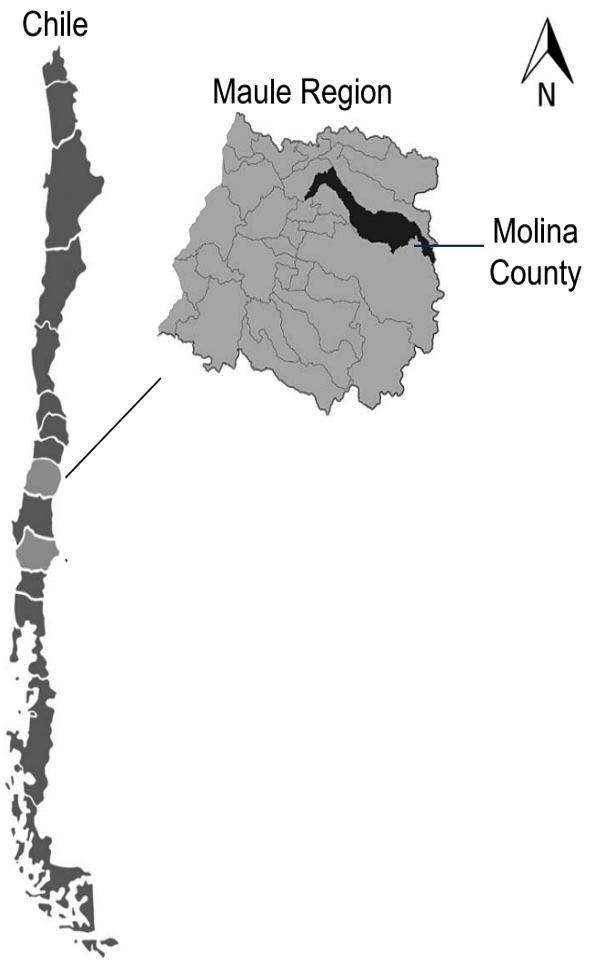
The pilot is being implemented within the MAUCO cohort, a population-based cohort in Chile’s Maule region, allowing the team to identify logistical, cultural and operational barriers before broader scale-up.
Ultimately, our goal is to contribute evidence that informs public health decision-making and strengthens early detection of HPV and STIs.”
“Our work aims to reach individuals often left out of traditional screening programs,” Spencer said. “By integrating self-sampling into primary care, we hope to support more equitable, accessible and effective cervical cancer prevention.”
This initiative represents a major expansion of the Center for Global Oncology’s footprint in South America and builds on Northwestern’s longstanding leadership in global cancer prevention. The center has previously led large-scale efforts in sub-Saharan Africa—particularly in Nigeria—where national HPV and cervical cancer screening policies were revised following Hou’s leadership. Lessons from Chile are expected to inform future implementation efforts across the region and in underserved communities in Chicago and nationwide.
The Center for Global Oncology is a shared center with the Robert H. Lurie Comprehensive Cancer Center of Northwestern University and Havey Institute for Global Health.
Lifang Hou, MD, PhD, and Brian Joyce, PhD, are members of the Havey Institute for Global Health. Hou is also a member of the Institute for Public Health and Medicine (IPHAM), Robert H. Lurie Comprehensive Cancer Center and Northwestern University Clinical and Translational Sciences Institute (NUCATS).
For details on events, news and funding opportunities, sign up for the Havey Institute for Global Health newsletter.